News
Lyria 3: Google Democratizes Music Creation with Artificial Intelligence
Google intègre Lyria 3 dans Gemini : créez des morceaux musicaux personnalisés à partir de texte ou d’images. L’IA musicale accessible à tous.

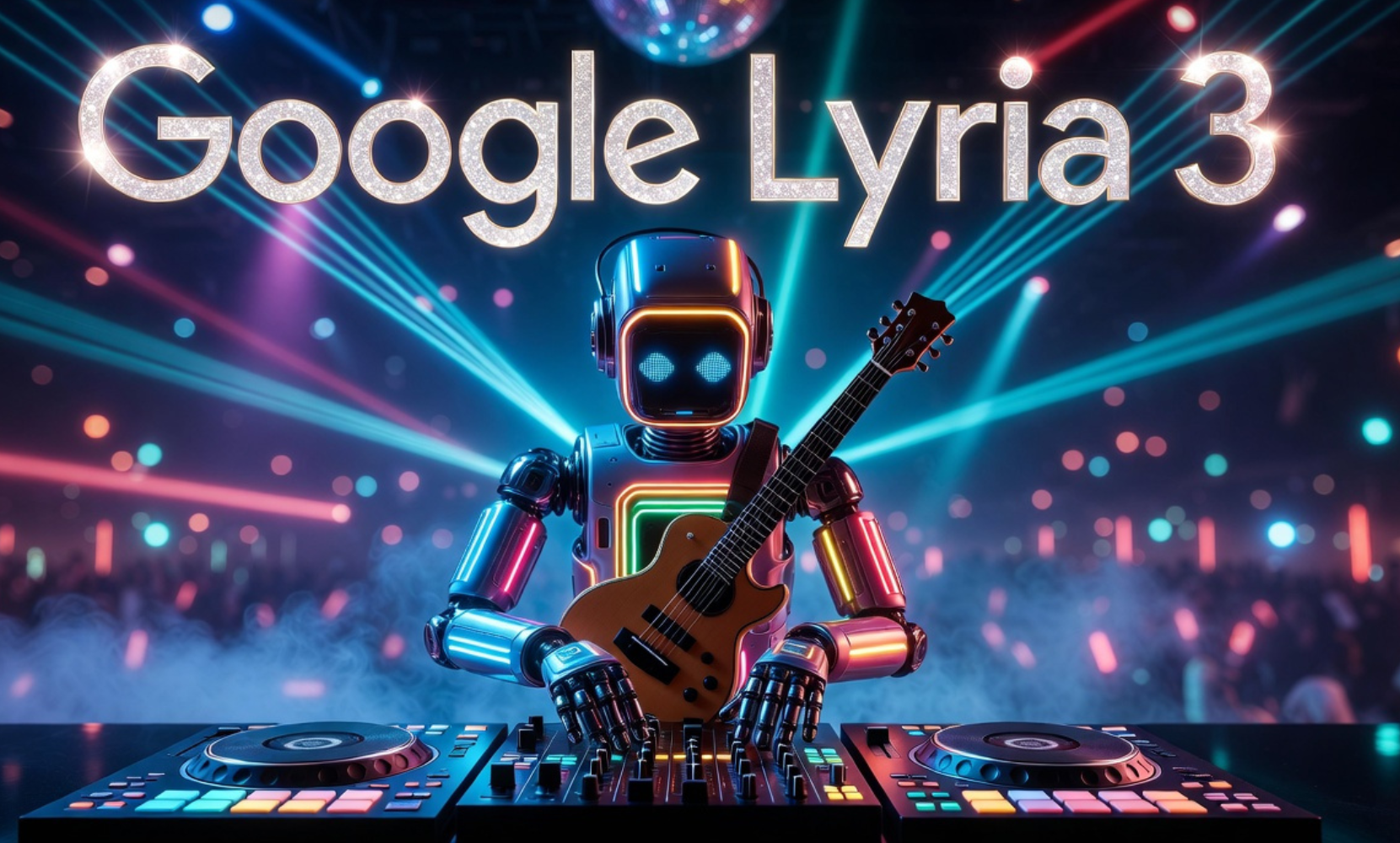
Artificial intelligence reaches a new milestone in the creative domain. Google has just integrated Lyria 3, its most advanced music generation model, directly into the Gemini app. This innovation now allows anyone to create 30-second music tracks in a few clicks, simply from textual descriptions or images. An advancement that redefines the accessibility of music creation and opens up fascinating prospects for content creators, music lovers, and professionals.
We just dropped Lyria 3: our latest generative music model. 🔊
— Google DeepMind (@GoogleDeepMind) February 18, 2026
It can turn photos and text into dynamic tracks – complete with vocals and lyrics. 🧵 pic.twitter.com/Bd2CHCSthO
Google Lyria: A Major Evolution in Audio Generation
Lyria 3 represents the culmination of Google DeepMind’s work in the field of AI audio generation. Unlike previous versions of the Lyria model, this third iteration brings three substantial improvements that transform the user experience.
Firstly, Lyria 3 automatically generates lyrics for the created tracks. No more needing to compose the song text yourself; the model analyzes your prompt and produces coherent lyrics that harmoniously integrate with the music. Secondly, users benefit from much more granular creative control over elements such as musical style, voices, and tempo. Finally, the audio quality has taken a leap forward, allowing for the creation of musically more complex and realistic tracks.
This renewed accessibility of Google Lyria is part of a broader trend. Generative AI is no longer limited to text and images but now invests all creative media, including audio and video.
How Google Lyria Works in the Gemini App
The integration of Lyria 3 into Gemini offers two particularly intuitive modes of use. The first, “text-to-track,” allows you to simply describe the desired musical mood. For example, a user can request “a funny, slow R&B song about a sock reuniting with its partner,” and Lyria 3 will generate in a few seconds a track matching this description, including lyrics.
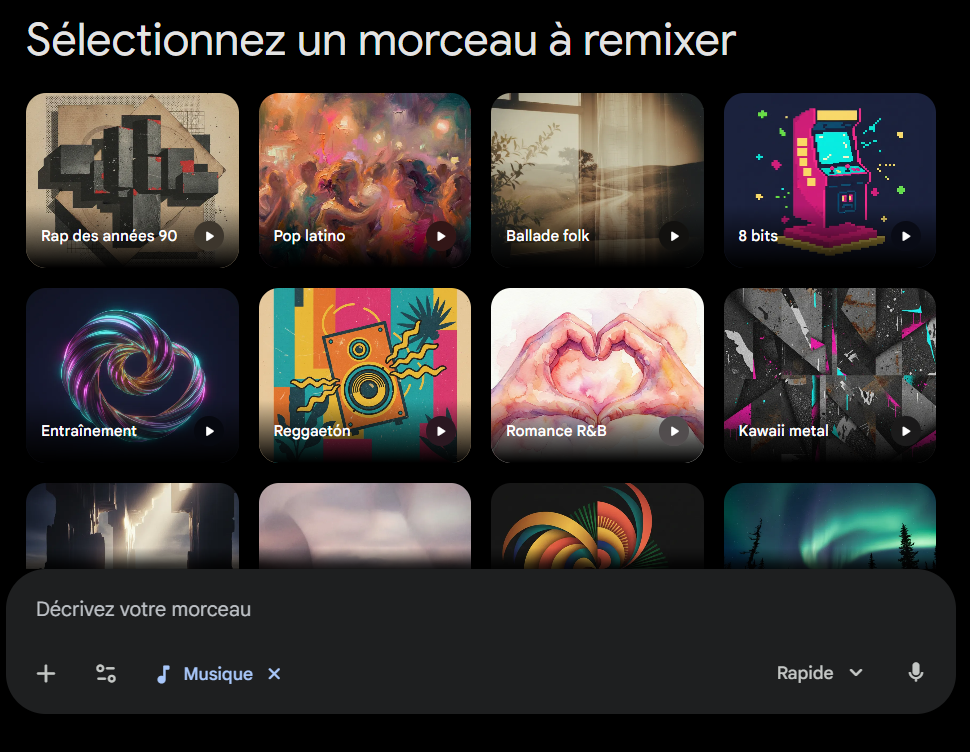
The second mode leverages Gemini’s multimodality by allowing music creation from photos or videos. Imagine uploading photos of your dog Duncan hiking in the woods, and asking Lyria Google to compose a song about that moment. The AI will analyze the visual content to create a track with lyrics adapted to the mood captured in the images.
Each creation is accompanied by a cover art automatically generated by Nano Banana, Google’s image model, thus facilitating sharing on social media. The stated goal is not to replace professional composers but to offer a new, fun, and accessible way to express oneself musically in everyday life.
Beyond Gemini, Lyria 3 and the Creative Ecosystem
While the Gemini app is the mainstream entry point for Lyria 3, Google is also deploying this model on other platforms. YouTube creators in the United States and other countries can notably use Lyria 3 via Dream Track to create unique soundtracks for their Shorts. This feature allows for further customization of short video content, a format that has become essential on social media.
Furthermore, Google offers Music AI Sandbox, a set of experimental tools developed in collaboration with music industry professionals. This platform allows musicians to explore new creative avenues, generate harmonies, or even overcome writer’s block. Lyria 2, the model preceding Lyria 3, already powers this tool and demonstrates how AI can become a true creative partner rather than a substitute.
Security and Ethics: The Safeguards of Google Lyria
Aware of the ethical issues related to AI-generated content, Google has integrated several protection mechanisms into Lyria 3. All created tracks are marked with SynthID, an imperceptible watermarking technology that allows identification of content generated by Google’s AI. This approach addresses growing concerns about the authenticity of digital content.
Moreover, Google Lyria was designed to encourage original expression, not to imitate existing artists. If a user names a specific artist in their prompt, the system draws inspiration from their style or mood but does not seek to reproduce that artist’s voice or compositions. Automatic filters also check that creations do not match existing copyrighted content.
Democratization of Music Creation
The arrival of Lyria 3 in Gemini marks a significant step in the democratization of music creation. By making composition accessible to everyone, without specific technical skills, Google helps broaden the possibilities of creative expression. Whether it’s to create a personalized soundtrack for a vacation video, imagine a humorous jingle for an event, or simply explore one’s musical creativity, Google Lyria opens doors previously reserved for trained musicians.
This innovation follows recent developments in generative AI, after images with DALL-E or Midjourney, Nano Banana, and video with models like Sora. Audio thus becomes the new territory for exploration of these technologies, with applications that go far beyond mere entertainment: advertising, cinema, video games, podcasts… the potential uses are numerous and promising.
[1] A new way to express yourself: Gemini can now create music
[2] Lyria 3 Create custom tracks for any moment
[3] Music AI Sandbox, now with new features and broader access