News
Google Introduced Veo 3.1 : What you need to know

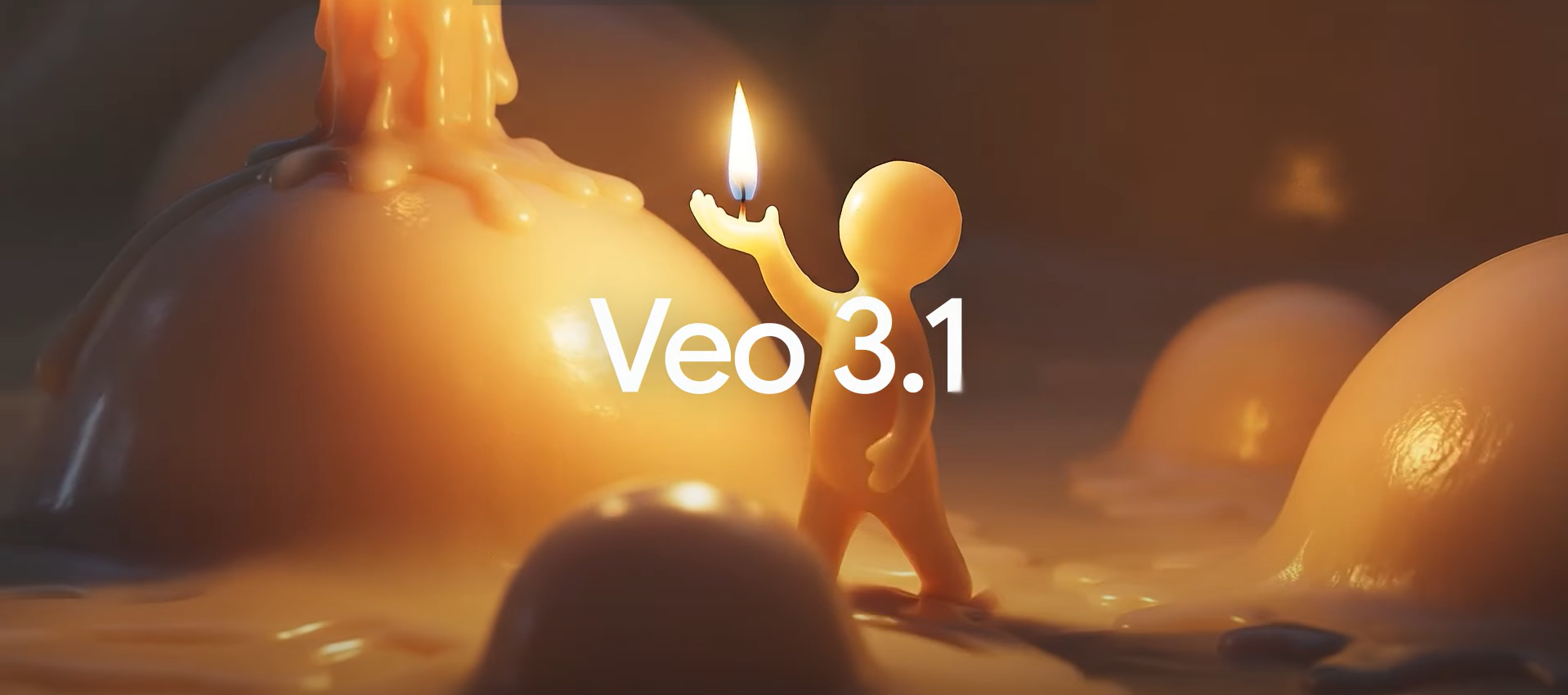
Since the rise of generative artificial intelligence models, the race for automated video creation has intensified. After OpenAI’s Sora, Google has taken a new step forward with Veo 3.1, the latest update to its video generation model. Announced in an official post on the Google Blog, this version significantly improves the quality, temporal consistency, and customization capabilities of generated videos. But what exactly does Google’s Veo 3 offer, and why does this update mark a turning point?
Video Generation Tool, Google Veo 3
Initially launched in May 2024, Google Veo is an AI model designed to transform text descriptions into high-quality, realistic videos. The recently unveiled version 3.1 introduces several notable improvements. First, it now enables the generation of videos in up to 1080p resolution, with enhanced visual stability over time, a major challenge in video generation, where objects or characters often tend to “warp” or distort as the seconds go by.
Next, Veo 3.1 introduces a feature called Flow, which allows users to more precisely guide the visual narrative. Through this interface, it becomes possible to adjust the camera movements, modify the lighting, or even define specific transitions between scenes, all from simple text prompts or reference images. This brings Google Veo closer to professional post-production tools, while remaining accessible to non-experts.
Video Generation with Complex Prompts
One of the major strengths of Google’s Veo 3.1 is its ability to understand complex prompts, including emotions, artistic styles, or specific atmospheres. This precision paves the way for a wide range of applications, from storyboard creation for film, to personalized marketing content production, or even educational tools to illustrate abstract concepts.
In this context, Veo 3.1 fits into Google’s broader strategy around generative AI. It can notably be linked to Google NanoBanan, a widely praised and widely used project for generating perfectly coherent images.
Google Veo 3.1 for Video Creation
With Veo 3.1, Google reaffirms its ambition to play a major role in the future of AI-assisted visual creation. This model doesn’t just imitate reality, it allows users to imagine it, shape it, and tell it differently. For creators, marketers, and educators alike, Google Veo becomes a powerful tool to express ideas without relying on traditional production budgets.
Of course, technology is only a tool, its true impact depends on how it’s used. But one thing is certain: with Google’s Veo 3, we are entering an era where telling a story through video will soon depend only on imagination.