News
Google Antigravity : IDE agentic multimodal

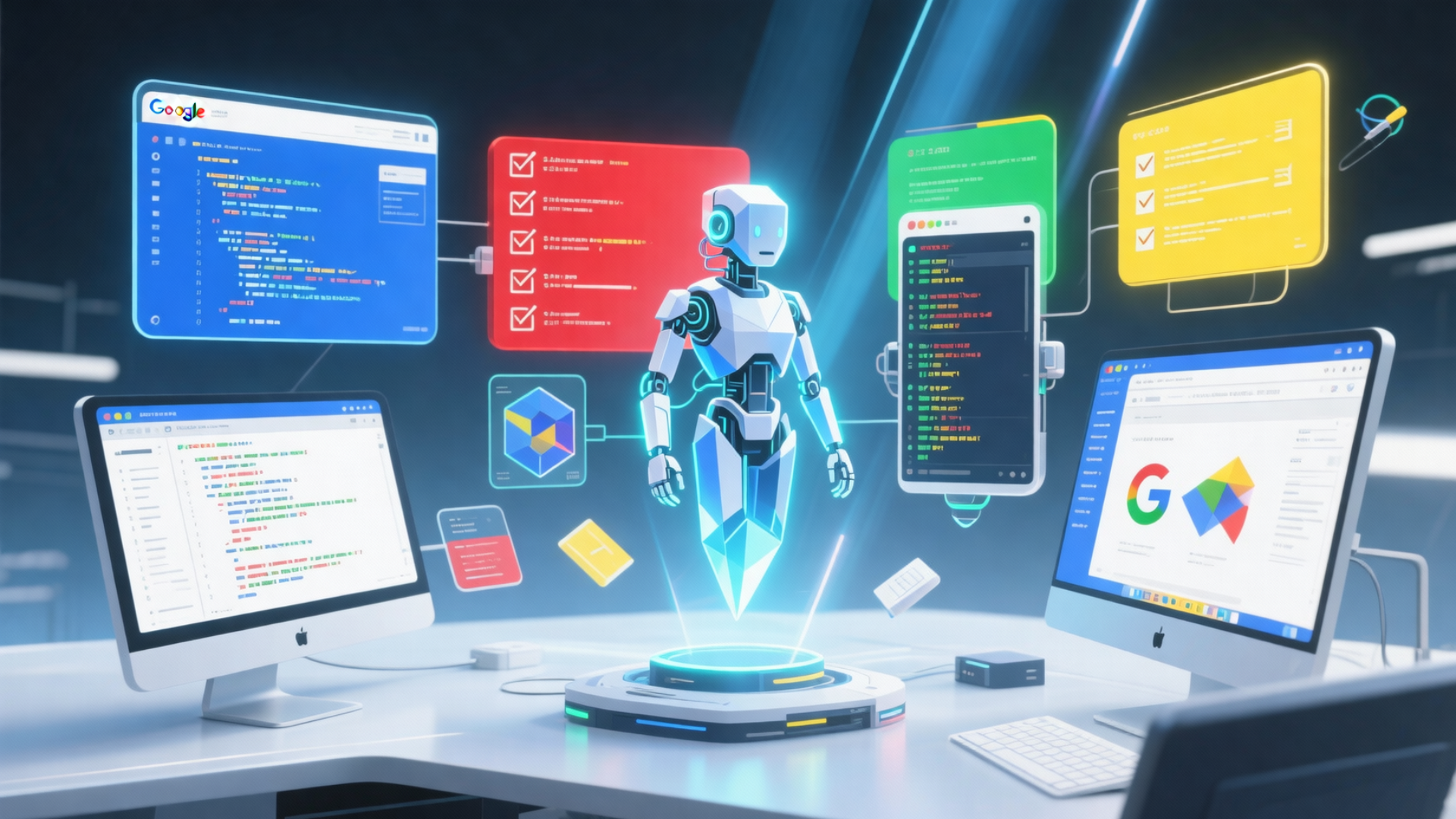
Software development is undergoing a major transformation. Following the era of assistants that accelerate code writing, we now enter the age of agents that autonomously orchestrate entire tasks. Google has just launched Antigravity, an agentic development platform that redefines how we build applications. More than just an AI-enhanced code editor, Google Antigravity introduces a revolutionary approach: delegating entire missions to autonomous agents capable of planning, executing, and verifying their own work without constant human intervention.
The Age of Agents with Google Antigravity
Unlike traditional tools that integrate AI as merely a sidebar feature, Google Antigravity completely reimagines the development environment. The philosophy is clear, agents should not be relegated to the role of chatbots in a sidebar, but should instead have their own dedicated workspace.
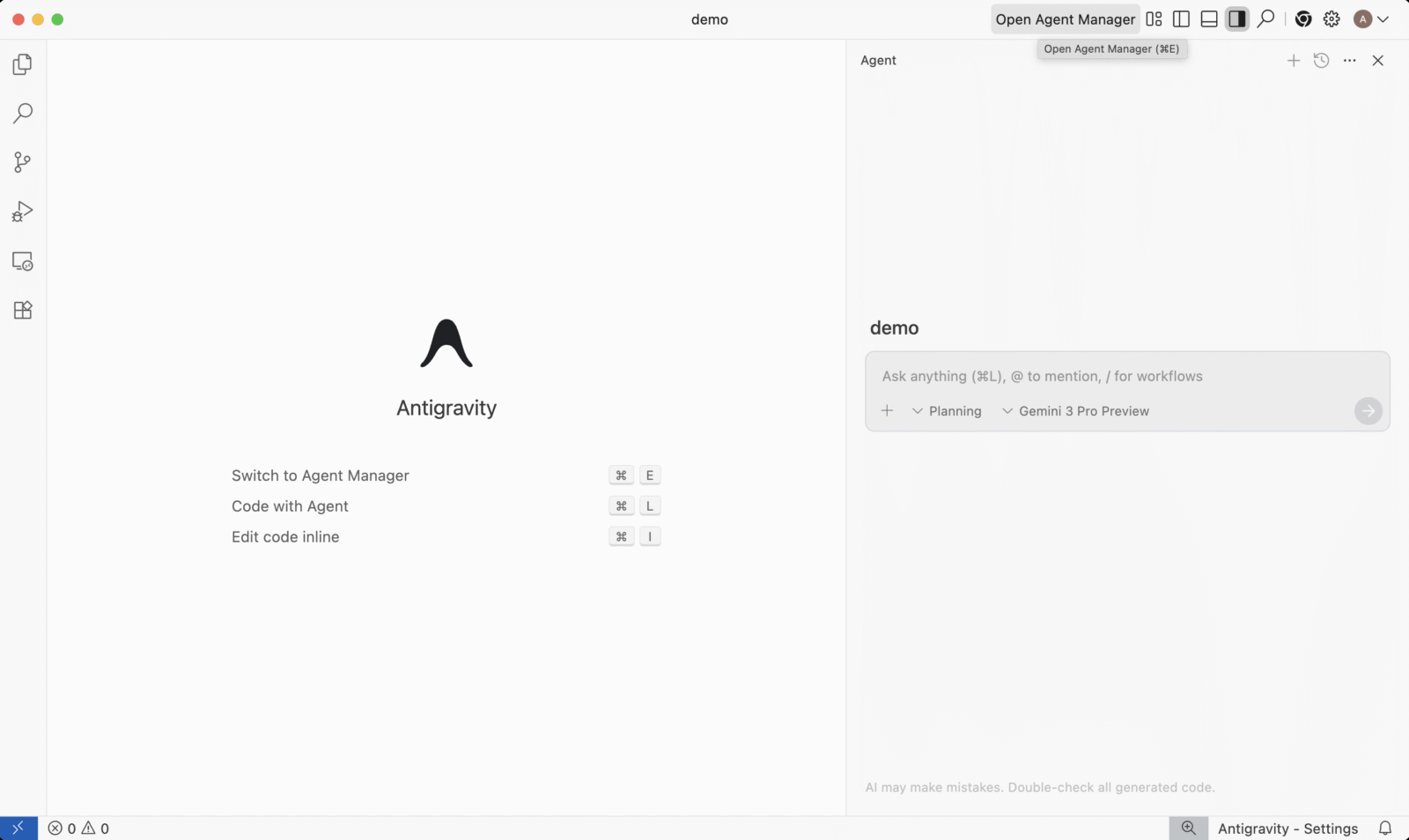
This platform combines two distinct approaches to interacting with code. On one hand, it offers a classic AI-enhanced editing experience familiar to developers. On the other, it introduces a radically new, agent-oriented interface that enables delegation of complex tasks requiring actions across the editor, terminal, and even the web browser.
The goal of programming with Google Antigravity is simple: to enable developers to operate at a higher level by focusing on objectives rather than implementation details. No more constant context-switching between different tools and windows, the agent handles the full orchestration of tasks, freeing up time to focus on high-level architectural decisions.
Game-Changing Features of Google Antigravity
One of the key innovations lies in the Artifacts system. Delegating work to an agent requires trust, but how can you verify what it’s doing without getting lost in thousands of lines of technical logs? Google Antigravity solves this problem elegantly. Agents produce concrete, visual deliverables, task lists, implementation plans, screenshots, and browser session recordings.
These Artifacts provide instant insight into the agent’s reasoning process. If something goes wrong, you can simply leave a comment directly on the Artifact, just as you would on a collaborative document. The agent then incorporates this feedback without interrupting its execution flow, creating a truly fluid and efficient human-machine dialogue.
Another particularly compelling feature of Google Antigravity is its support for continuous learning. The platform treats knowledge as a core asset, enabling agents to store useful information and code snippets in a dedicated knowledge base. This memory progressively enhances the agent’s performance, making it increasingly relevant and effective across projects over time.
In practical terms, programming with Google Antigravity covers three major categories of everyday tasks. Developers can now delegate entire missions that previously required constant juggling between different contexts, tools, and environments. The platform handles this complexity behind the scenes, delivering a unified and seamless experience.
Accessibility Designed for All Developers
Google is making Antigravity available starting today as a free public preview for individual users. This democratic approach reflects the company’s commitment to driving widespread adoption of this new development paradigm.
The platform runs on all major operating systems, macOS, Windows, and Linux. Most importantly, it doesn’t lock you into a single AI model. Google Antigravity offers remarkable flexibility, providing generous usage limits on Gemini 3 Pro while also fully supporting Anthropic’s Claude Sonnet 4.5 and OpenAI’s GPT-OSS. This versatility allows every developer to choose the model best suited to their specific needs.
Toward a New Development Paradigm
Google Antigravity marks a significant milestone in the evolution of development tools. By placing agents at the heart of the creative process, rather than on its periphery, this platform envisions a future where developers focus more on high-level orchestration than on line-by-line coding. This vision aligns with the broader trend toward agentic AI, where systems evolve from passive assistants into active, autonomous collaborators. For teams seeking to boost productivity without sacrificing control, Google Antigravity offers a promising balance between intelligent delegation and human oversight, redefining what it truly means to program in the era of artificial intelligence.
[1] Build with Google Antigravity, our new agentic development platform