


News
Genie 3 : The ai that generates interactive worlds in real-time

Imagine being able to create a virtual world in seconds simply by describing it with words. Even better, imagine being able to walk through it, explore it as if you were really there, and watch this universe adapt to your actions in real time. That’s exactly what Genie 3 offers, the new AI model developed by Google DeepMind that pushes the boundaries of what we call “world models.”
What is Genie 3 and how does it work?
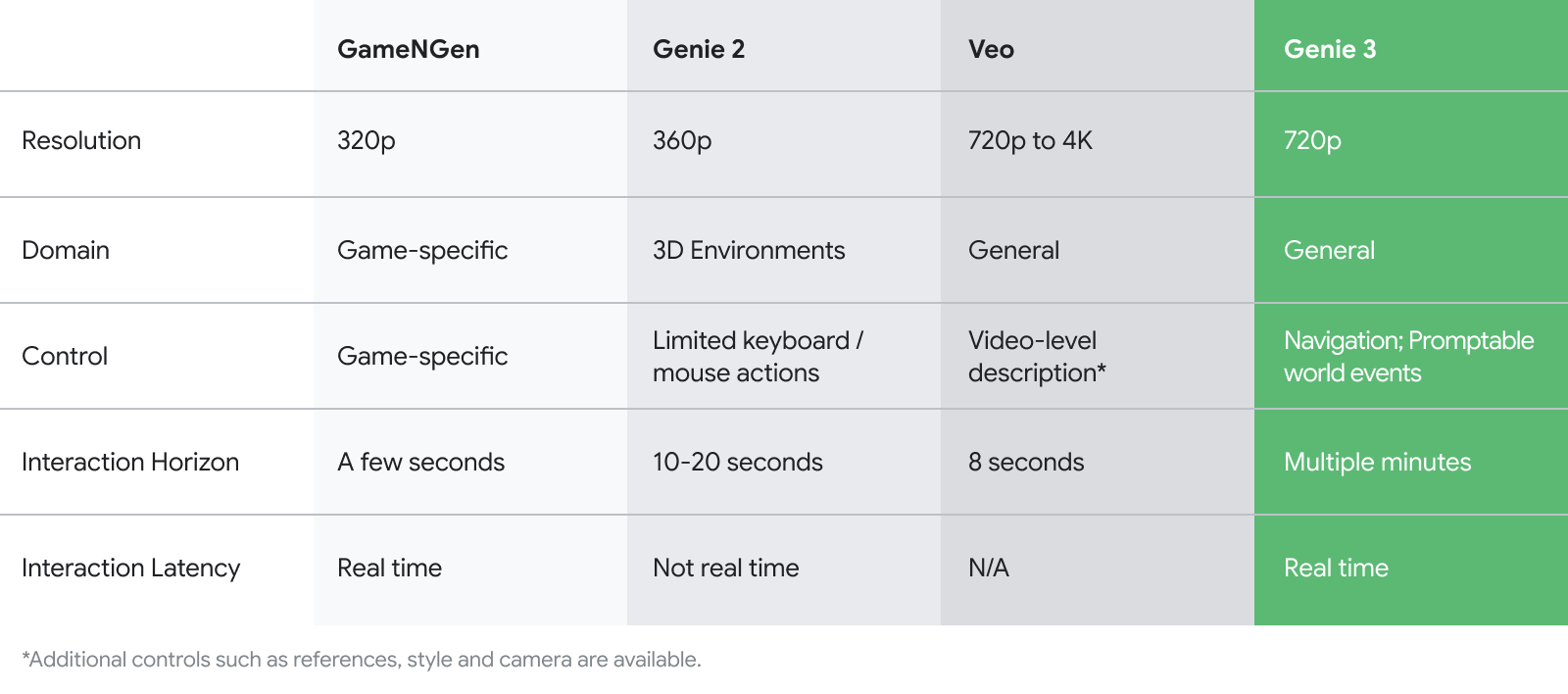
Genie 3 is a general-purpose artificial intelligence model capable of generating interactive environments from simple text descriptions. Unlike traditional video generation models that produce fixed sequences, Genie 3 creates dynamic worlds where you can navigate freely. The model generates the path ahead of you in real time, at 24 frames per second and in 720p resolution, while maintaining visual consistency for several minutes.
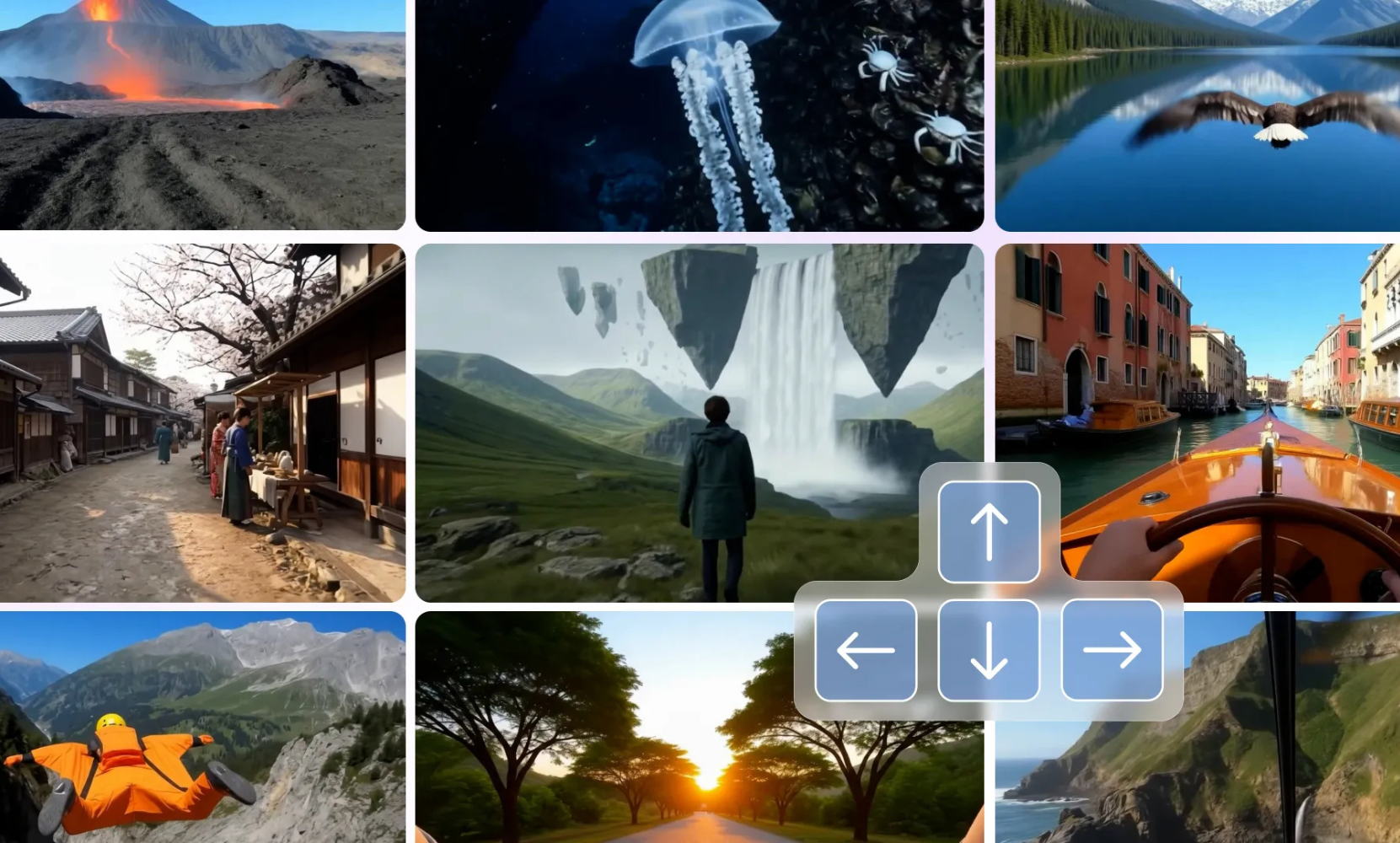
The magic of Genie 3 lies in its ability to understand the physical laws of the real world. It simulates flowing water, light reflections, complex interactions between objects, and even animal behaviors. You can create a forest ecosystem with diverse wildlife, explore the ruins of ancient Greece, or traverse a volcanic landscape aboard a wheeled robot. The possibilities are virtually endless.
The system relies on sophisticated auto-regressive technology. This means that each new generated image takes into account the entire history of your exploration. If you retrace your steps after a minute, Genie 3 remembers what you saw previously and maintains environmental consistency. This visual memory can go back up to one minute, which represents a considerable technical achievement.
The impressive capabilities of Genie 3
What really sets Genie 3 apart from its predecessors like Genie 1 and Genie 2 is its real-time interaction capability. With Genie 3, you’re no longer just watching an AI-generated video—you’re actively exploring a world that builds itself as you move. The model can simulate different perspectives, from first-person to third-person view, according to your preferences.
The possible applications are fascinating. Genie 3 can create photorealistic environments representing real places like Venice or the Alps, but also completely fantastical universes with imaginary creatures moving across rainbow bridges. The model excels at modeling complex natural phenomena: coastal storms with crashing waves, ocean depths populated by bioluminescent jellyfish, or Japanese zen gardens with their refined details.
For artificial intelligence researchers, Genie 3 represents a major advance in training autonomous agents. Google DeepMind tested the model with SIMA, their generalist agent for virtual 3D environments. The agent can receive goals to accomplish and navigate through worlds created by Genie 3 to achieve them, paving the way for applications in robotics and autonomous systems.
Project Genie: Public access is taking shape
Google doesn’t plan to keep this technology in its laboratories. Since late January 2026, the company has been rolling out Project Genie, an experimental prototype accessible to Google AI Ultra subscribers in the United States. This web application allows anyone to create, explore, and remix interactive worlds using text prompts and images.
The interface offers three main features: “World Sketching” to draw your world with words and images, real-time exploration with dynamic path generation, and remixing that allows you to start from existing worlds to create new interpretations. Users can even download videos of their virtual explorations.
The limits and future of world models
Despite its prowess, Genie 3 still has certain limitations. The generated environments are not always perfectly realistic or faithful to the descriptions provided. Characters can sometimes be difficult to control with latency in commands. The interaction duration remains limited to a few minutes rather than hours of continuous exploration. Finally, rendering clear and legible text in generated worlds remains a challenge.
These constraints are normal for cutting-edge technology still in development. Google DeepMind continues to improve the model and plans to expand access to Project Genie in other territories. The team is working particularly on enriching the space of possible actions for agents and perfecting the simulation of interactions between multiple independent agents.
Genie 3 marks a decisive step toward complete simulation of virtual worlds. Beyond entertainment, this technology could revolutionize education, professional training, video game design, and even scientific research. By enabling the creation of infinite environments on demand, Genie 3 opens fascinating prospects for virtual exploration and machine learning. One more step toward artificial intelligences capable of navigating the complexity of the real world.
[1] Ha, D., & Schmidhuber, J. (2018, march 27). World models. arXiv. https://arxiv.org/abs/1803.10122
[2] Genie 3: A new frontier for the world models
[3] SIMA Team, Abi Raad, M., Ahuja, A., Barros, C., Besse, F., Bolt, A., Bolton, A., Brownfield, B., Buttimore, G., Cant, M., Chakera, S., Chan, S. C. Y., Clune, J., Collister, A., Copeman, V., Cullum, A., Dasgupta, I., de Cesare, D., Di Trapani, J., … Young, N. (2024, 13 march). Scaling instructable agents across many simulated worlds. arXiv. https://arxiv.org/abs/2404.10179
[4] Project Genie: Experimenting with infinite, interactive worlds