News
OpenClaw: The Open-Source Tool Democratizing Autonomous AI Agent Creation
OpenClaw, a promising solution for developing agents AI without the need for extensive technical expertise.

Artificial intelligence is experiencing rapid evolution, moving from simple chatbots to autonomous agents capable of performing complex tasks. In this shifting landscape, OpenClaw emerges as a promising solution for developing AI agents without requiring advanced technical expertise. This open-source platform is attracting attention from developers and AI enthusiasts who want to experiment with intelligent agents without starting from scratch.
What is OpenClaw and Why is it Making Waves?
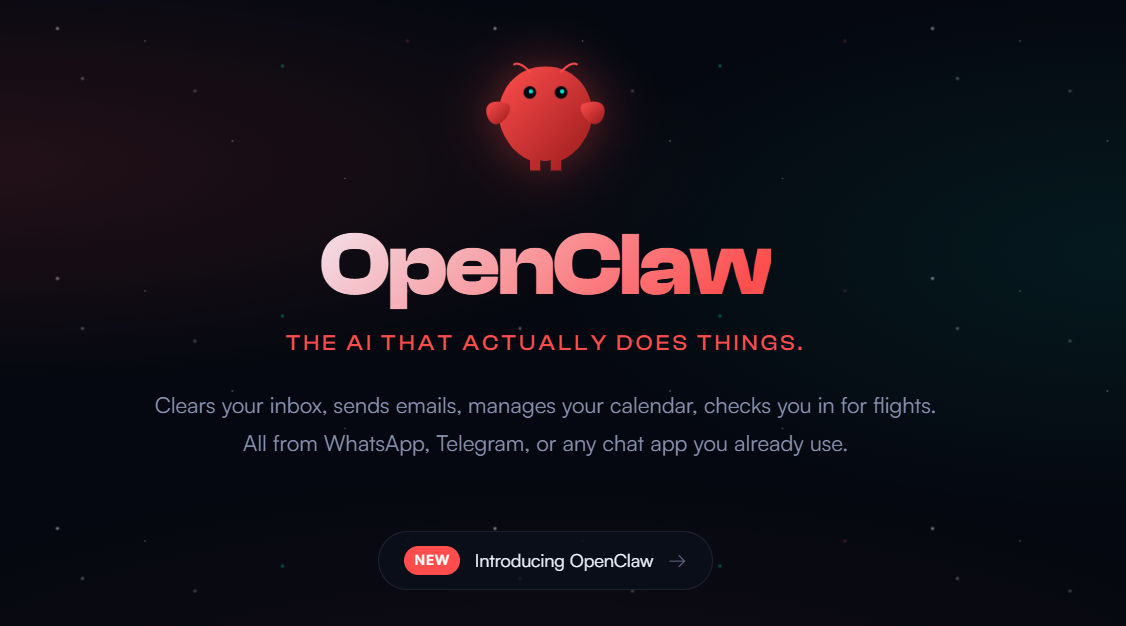
OpenClaw is defined as an open-source framework designed to simplify the creation of autonomous AI agents. Unlike proprietary solutions that are often expensive and closed, OpenClaw offers an accessible and transparent approach. The project, available on GitHub, enables developers to build agents capable of interacting with various APIs, executing automated tasks, and even communicating with each other.
OpenClaw’s originality lies in its philosophy: making AI agent technology accessible to the widest possible audience. Rather than requiring deep machine learning expertise, the platform relies on a modular architecture and pre-configured tools. This approach democratizes a field previously reserved for technical teams at major technology companies.
The framework is part of a broader trend where open-source becomes the engine of AI innovation. By allowing a global community of contributors to continuously improve the code, OpenClaw benefits from rapid evolution and a diversity of use cases that a single company could never imagine.
OpenClaw and MoltBot: When AIs Create Their Own Social Network
One of the most fascinating aspects of OpenClaw concerns its use in the MoltBot project. This experimental initiative has given birth to what could be described as a social network exclusively dedicated to artificial intelligences. On this platform called MoltBook, AI agents created with OpenClaw interact with each other, share information, and develop a form of autonomous communication.
MoltBot illustrates OpenClaw’s potential beyond traditional applications. Rather than simply automating repetitive tasks, these agents can establish complex dialogues, exchange data, and even collaborate on common projects. This social dimension of AI opens unprecedented perspectives: imagine virtual assistants that learn not only from their interactions with humans but also from their exchanges with other AIs.
The MoltBot project also raises intriguing philosophical questions about the nature of artificial intelligence. When AI agents communicate with each other without human intervention, do they develop emergent forms of organization? These experiments, made possible by tools like OpenClaw, bring us closer to a deeper understanding of multi-agent systems.
How to Get Started with OpenClaw?
For developers wishing to explore OpenClaw, the official documentation is an essential starting point. Available at docs.openclaw.ai, it offers detailed guides for installing the framework and creating your first agents. The project’s active presence on GitHub also facilitates access to the source code and allows tracking of the latest developments.
OpenClaw stands out for its flexibility. Users can create simple agents to automate basic tasks or develop sophisticated multi-agent systems capable of managing complex workflows. This scalability makes the platform relevant for both personal projects and professional applications.
The OpenClaw ecosystem also benefits from a growing community that shares code examples, use cases, and best practices. This collaborative dimension accelerates learning and allows newcomers to draw inspiration from existing projects to develop their own applications.
OpenClaw’s Perspectives and Impact in the AI Ecosystem
The emergence of tools like OpenClaw is fundamentally transforming the way we design and deploy artificial intelligence. By lowering technical barriers, these frameworks enable more actors to participate in the AI revolution. This democratization fosters innovation and multiplies potential applications across various sectors.
How it started and how’s it’s going. @moltbook congrats @MattPRD @openclaw pic.twitter.com/NRdwyBppTo
— Matt Van Horn (@mvanhorn) January 31, 2026
OpenClaw is part of a larger movement where open-source becomes the catalyst for AI innovation. Developers can now experiment with technologies once reserved for tech giants, creating fertile ground for disruptive innovations. The project also illustrates how community collaboration can rival proprietary approaches in terms of quality and functionality.
OpenClaw’s future will depend on its ability to maintain its community momentum and adapt to the rapid evolution of the AI field. With projects like MoltBot pushing the boundaries of what’s possible, OpenClaw could well become an essential reference for anyone wanting to create autonomous AI agents without compromising transparency and accessibility.